A fix for every finding, written for the client's markup
AccessGuard reads the element that fails and the WCAG criterion it breaks, then writes the explanation and the code change for that exact element.
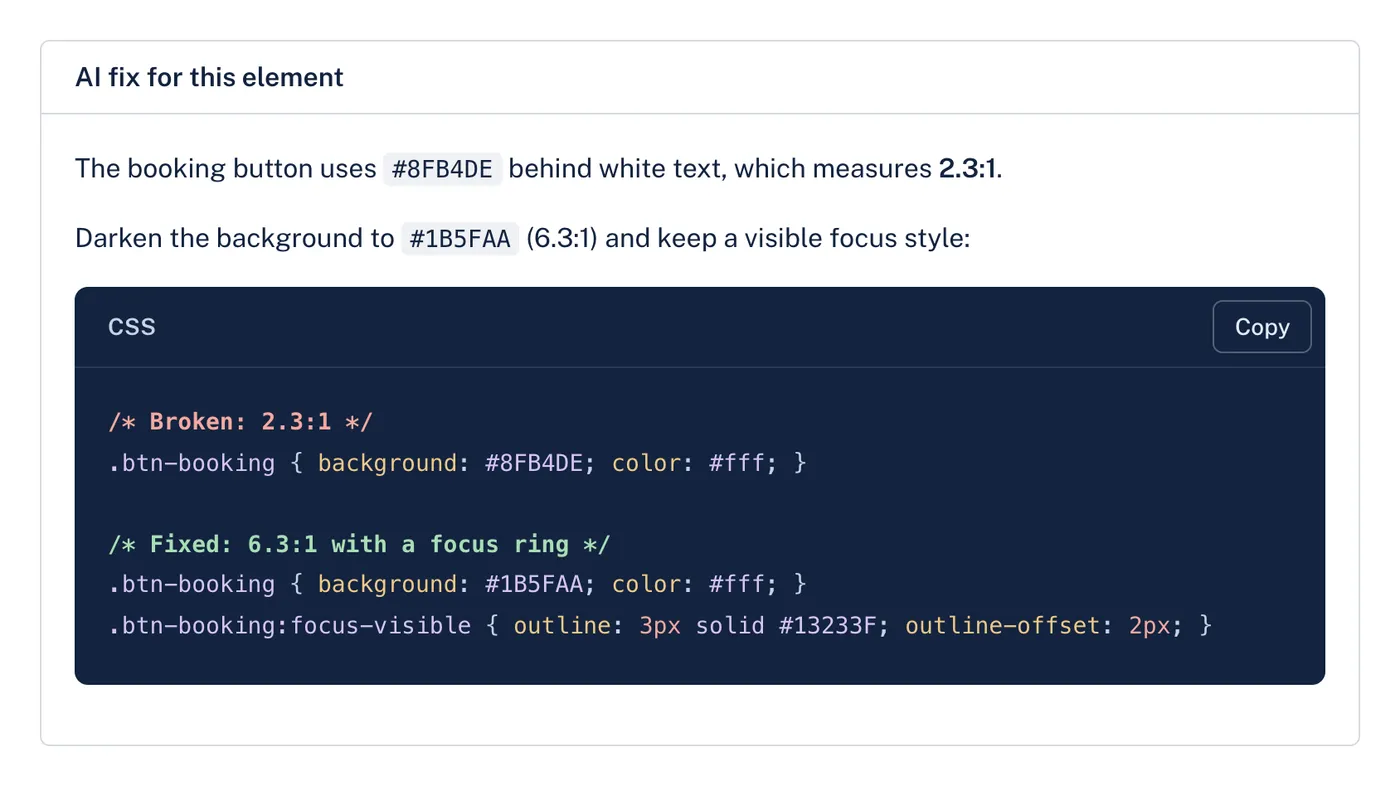
Written for the exact element
Generic advice says "increase contrast". An AI fix names the colors on the page, suggests one that passes and shows the change in the client's CSS or HTML, with broken and fixed code side by side.
Suggestions a developer reviews
Fixes are suggestions, not automatic changes to the client's site. A developer reads them, adjusts them to the codebase and ships them like any other change.
Alt text for images
Upload images to the Alt text tool and get a description for each one, written for its context. Edit anything before you copy it into the site.
What's included
- One fix per finding
- 1 credit for a fix written for one finding, kept on the finding afterwards.
- Broken and fixed code
- Code samples with the language labelled and a copy button.
- Alt text tool
- 1 credit per image.
Questions
Does AccessGuard change the client's site?
No. It never touches the site. You get suggested fixes to review and apply yourself, which is also why no widget or script is added to the client's pages.
Which plans include AI fixes?
AI fixes are included in every paid plan and use 1 credit each. Free accounts see the finding, the element and a written suggestion for how to fix it.
Can AI fixes be wrong?
Yes, sometimes. They are written for the element and criterion in the finding, but a developer should always review them before they go live.
Related
- White-label reports
Send clients a PDF they can read without a developer in the room, with your agency's name at the top and the detail your developers need behind it.
- Multi-site audits
Keep all your clients in one list, rescan after each release and see which sites got worse before your clients do.
- Alt text checker
Finds images, icons and image buttons with missing or empty text alternatives, and alt text that says nothing useful.
- Color contrast checker
Measures text and control colors on the rendered page against the WCAG 2.2 AA ratios, and flags links that differ from text by color alone.
- ARIA checker
Finds invalid roles and attributes, controls with no accessible name and ARIA that hides content people need.
Try it on a client site
Start with a free audit of one page. No account needed.